Word Search
NATIONAL BUTTERFLY OF INDIA - A CITIZEN POLL
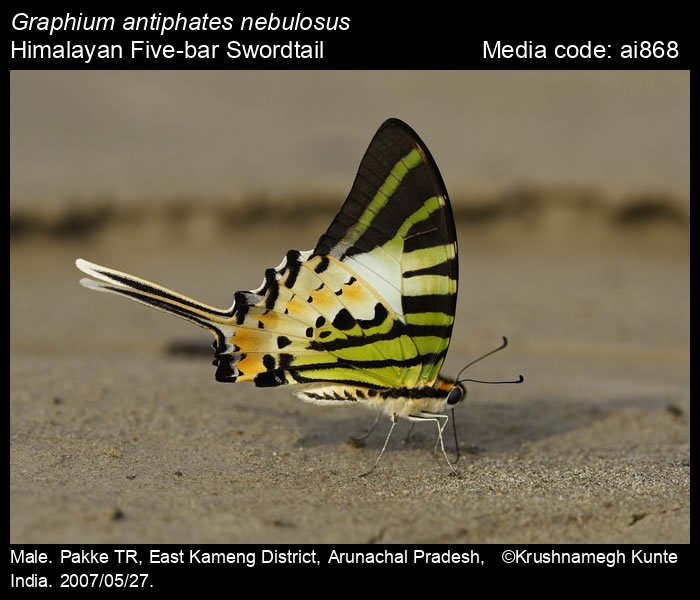
WHY A NATIONAL BUTTERFLY?
DRAGONFLY FESTIVAL
Coming soon ...
...BIODIVERSITY MARATHONS
Biodiversity Marathons are outreach programmes and bioblitz events conducted by the National Centre for Biological Sciences (a centre of Tata Instiute of Fundamental Research, Mumbai), and Indian Foundation for Butterflies, Bengaluru.
...CONSERVATION AND OUTREACH
Butterfly Parks and Butterfly Conservatories: These are great places to study the behaviour, lifecycles and other aspects of the biology of common as well as rare, endemic and endangered species, and to assist in their conservation efforts.
...HOW YOU CAN CONTRIBUTE TO ODONATA BIOLOGY, AND HELP PROTECT AND CONSERVE THEM?
We frequently receive queries as to what you—as a citizen and a non-specialist—can do to help this Odonata of India citizen science project or Dragonfly and Damselfly conservation in general. Below are some thoughts about what you can do.
CONTRIBUTING SPECIES AND BIOLOGY PAGES
Creating detailed species pages is a critical aspect of the development of the Butterflies of India website. If you would like to volunteer to create a species page, please email us before you start writing the text to see if anyone else is working on it, and to get specific guidance for that species.
...AUTHORSHIP POLICY FOR THE BUTTERFLIES OF INDIA WEBSITE
Each page on the Butterflies of India website has an author or a set of authors. As a policy, we give authorship only if: (a) one contributes lifecycles, which is substantial information that is not commonly found elsewhere, (b) one contributes significant range extensions, new records of larval host plants or similar new natural history information, or (c) one writes text about the species.
...INDIAN FOUNDATION FOR BUTTERFLIES
Coming soon ......
LOCAL PROJECTS: BENGALURU BUTTERFLY CLUB
Coming soon ...
...LOCAL PROJECTS: BUXA BUTTERFLY DIVERSITY SURVEYS
Coming soon ...
...IDENTIFICATION KEYS: Appias albina and A. libythea
Identification key for Common Albatross (Appias albina) and Striped Albatross (Appias libythea).
...
IDENTIFICATION KEYS: Judies (Abisara neophron and A. chela)
Identification key for Tailed Judy (Abisara neophron) and Spot Judy (A. chela).
...
LOCAL PROJECTS: NCBS BUTTERFLY BIOLOGY PROJECT
- To survey butterfly populations on the NCBS and GKVK campuses
- Create educational materials such as brochures and field guides for butterfly identifications and surveys for the Bengaluru area
- Study population dynamics of butterflies to understand long-term trends in butterfly populations in response to changing climate, habitat management, urban pollution, etc.
RESOURCES FOR PRESS
Here are some short write-ups that may be used for press release and news coverage: ABOUT THE BUTTERFLIES OF INDIA PROJECT: Full description in a structured format: See below. 200 words or less: India—a megabiodiverse country—is host to a spectacular number of butterflies, many of them endemic....
ODONATA OF INDIA WEBSITE PRODUCERS AND ASSOCIATES:
The Odonata of India website is produced as an informal, non-profit collaboration between a few institutions, groups and individuals. The website runs mainly on voluntary efforts and generous image contributions from largely amateur dragonfly-watchers. The scientific backbone is provided by more serious amateurs and working scientists who also work on this website on a voluntary basis.
...ABOUT US: THE ODONATA OF INDIA TEAM
- Shantanu Joshi: I am interested in ecology, taxonomy and biogeography of odonates. I completed by Bachelor's in Science from St. Xavier's College, Mumbai after which I worked at National Centre for Biological Sciences with Deepa Agashe's Adaptation Lab to study polymorphism in Agriocnemis pygmaea.
ABOUT US
The Odonata of India Website Team: Odonata of India website is a vast project that draws upon the expertise of a large number of odonata biologists, naturalists and advanced dragonfly-watchers, and upon the generous contributions from naturalists, citizen scientists and photographers.
...BUTTERFLY BIOLOGY
Life cycle of butterflies: Egg, Caterpillar, Pupa, and Adult butterfly
Differences between butterflies and moths
'HOW TO' HELP PAGES FOR BUTTERFLIES OF INDIA WEBSITE
Contributing Media Files (Photos) to Butterflies of India
How to Add and Edit Locality Records